
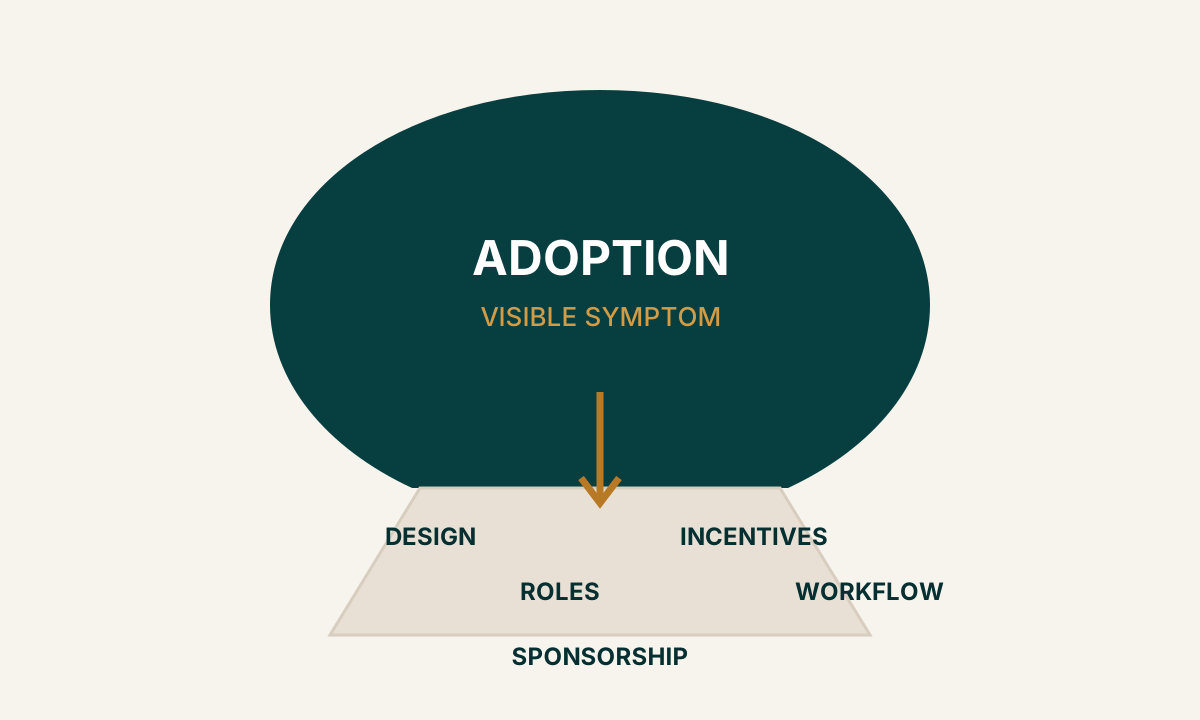
“Adoption” is often where the symptom becomes visible
A new system goes live and usage is low. Managers keep using the old spreadsheet. Employees create workarounds. A new process exists on paper, but the organization quietly returns to the old way of working.
At that point, it is tempting to name the problem: adoption.
Sometimes that diagnosis is correct. People may not understand the change, may not know how to perform the new work, or may not see enough reason to change behavior. But adoption can also be the place where an upstream design problem finally becomes visible.
Change cannot compensate for missing design
Deloitte recently described this problem plainly: change management can support adoption, but it cannot compensate for unresolved decisions about roles, authority, expectations, and the human system around a transformation. When those questions are deferred, the organization accumulates what Deloitte calls human design debt.
That debt shows up later as friction, confusion, workarounds, delays, and apparent resistance.
The distinction matters because the remedies are different. If the real issue is knowledge, training may help. If the issue is weak sponsorship, leaders may need to reinforce the direction more consistently. But if employees are being asked to operate inside contradictory incentives, unclear roles, broken workflows, or impossible service expectations, more communications will not repair the design.
Four questions before calling it resistance
- Is the new way of working actually usable? If the new process creates more steps, longer wait times, duplicate entry, or unclear exceptions, people may be responding rationally to friction.
- Are roles and decision rights clear? A person cannot reliably adopt a new responsibility that has never been made explicit, especially when old authority patterns remain in place.
- Do incentives reinforce the new behavior? If the transformation asks teams to collaborate while performance measures reward local optimization, the system is sending two different instructions.
- Are leaders reinforcing the same interpretation? Polite agreement at the top is not enough. If leaders describe the purpose, priorities, tradeoffs, and expectations differently, the organization receives mixed signals and adapts accordingly.
People readiness still matters
None of this diminishes the importance of change management. Prosci continues to emphasize that people readiness depends on clarity, willingness, and capability, not on a training attendance count or a one-time communication push. Resistance also has identifiable causes, including poor awareness, weak support, incentive misalignment, confidence gaps, and negative prior experience.
The point is not to replace adoption work with process work. It is to diagnose the system before prescribing the intervention.
A better recovery question
When a transformation is struggling, ask: what would have to be true for the new way of working to make sense to the people expected to perform it?
That question moves the conversation upstream. It forces leadership to look at design, roles, decisions, incentives, process friction, sponsorship, capability, and communication together.
The visible problem may be adoption. The real problem may be that the organization is asking people to adopt something that has not yet been made coherent.
Test the diagnosis before adding another adoption campaign
If a transformation is being labeled an adoption problem, Peloton Consulting can help leadership test whether the visible resistance is actually being created by design, role, process, governance, or reinforcement issues upstream.
Start a Conversation →