
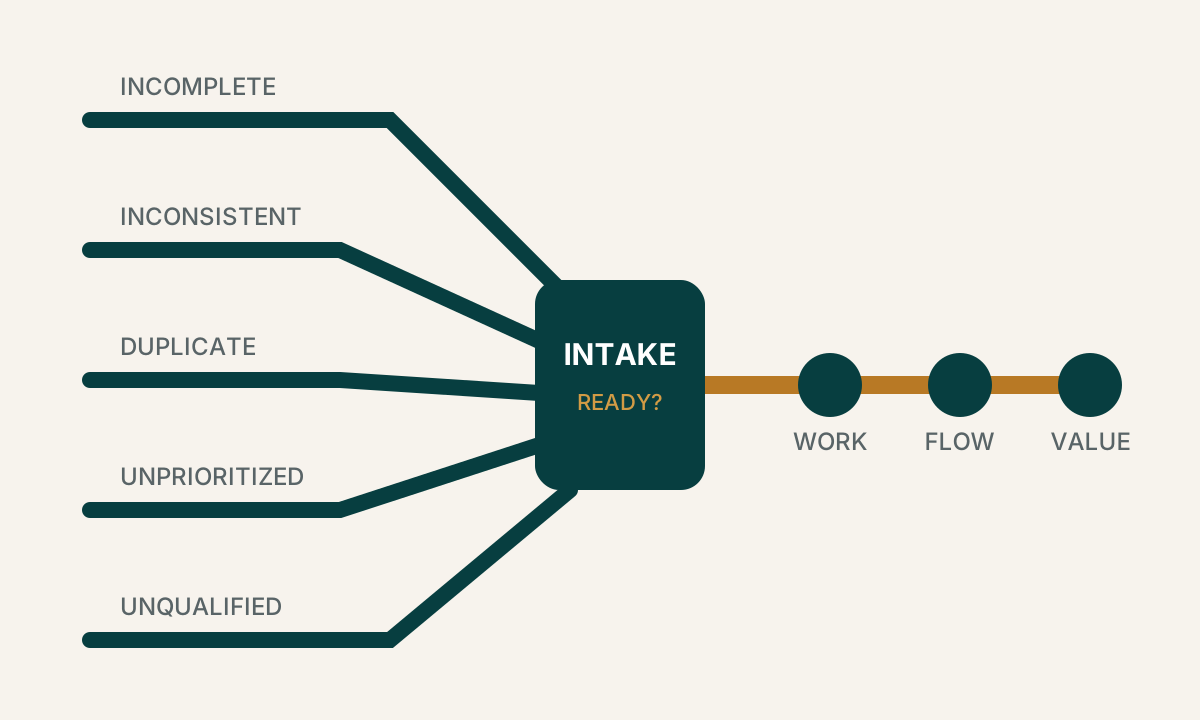
A busy team can still be waiting on work
A queue is growing. Cycle time is slipping. Customers are asking for status. The natural conclusion is that the team doing the work is too slow, understaffed, or inefficient.
Sometimes that is true. But there is another pattern that is easy to miss: the team is busy because too much of its capacity is being spent repairing the work before the real work can begin.
Requests arrive without the required information. Intake categories are inconsistent. Approvals are missing. Priorities are unclear. The same request is submitted through multiple channels. Staff chase basic facts, return items for correction, reclassify work, and negotiate exceptions before any value-producing step starts.
Demand quality and execution quality are different problems
This distinction is important because the remedies can point in opposite directions.
If execution quality is poor, the organization may need better process design, capability, automation, staffing, controls, or management. If demand quality is poor, pushing the downstream team to work faster may actually make the system worse. It increases pressure without removing the rework that consumes capacity.
APQC describes a familiar version of this problem in procure-to-pay: requests stall when basic details are missing, and modern tools cannot deliver their full value because friction remains in the process. The lesson travels well beyond procurement.
What front-end friction looks like
- A high percentage of requests are returned, clarified, reclassified, or reopened.
- Different requestors supply different versions of what “complete” means.
- Experienced staff spend disproportionate time interpreting poor inputs rather than solving higher-value problems.
- Work enters through email, chat, forms, meetings, and informal escalation with no common intake standard.
- Priority is determined by who escalates hardest rather than by agreed business rules.
- Teams report high utilization but throughput remains stubbornly low.
Fix the front door before adding pressure downstream
A better approach is to define the conditions under which work is ready to enter the process.
That may mean a simpler request form, clearer entry criteria, required data fields, standard categories, a triage step, published service expectations, or a rule that incomplete work does not enter the active queue. It may also mean removing unnecessary information requirements that create friction without improving the decision.
The goal is not bureaucracy. The goal is to protect constrained capacity from avoidable rework.
Measure what enters, not just what exits
Most operational dashboards focus on output: items completed, backlog size, average cycle time, service-level performance. Those measures matter, but they can hide the cost of poor inputs.
Add measures for first-time completeness, return-for-correction rate, exception rate, intake-to-ready time, duplicate submissions, and the amount of specialist time consumed by clarification. These measures make demand quality visible.
Once that happens, leaders can distinguish a team that is slow from a system that keeps feeding the team work it cannot process cleanly.
The bottleneck may be upstream
Before adding headcount, another automation, or another productivity target, inspect the work entering the system.
The visible queue may sit with one team. The constraint may sit with the people, rules, forms, approvals, and assumptions that shape the work before it gets there.
Every bottleneck has a business cost. Some of the most expensive ones are disguised as bad requests.
Find out where the constraint actually sits
If a backlog keeps growing despite pressure on the team, the Operational Bottleneck Diagnostic can help identify whether the constraint sits in execution or in the quality of work entering the process.
Start a Conversation →